Experiment
Colors Generation
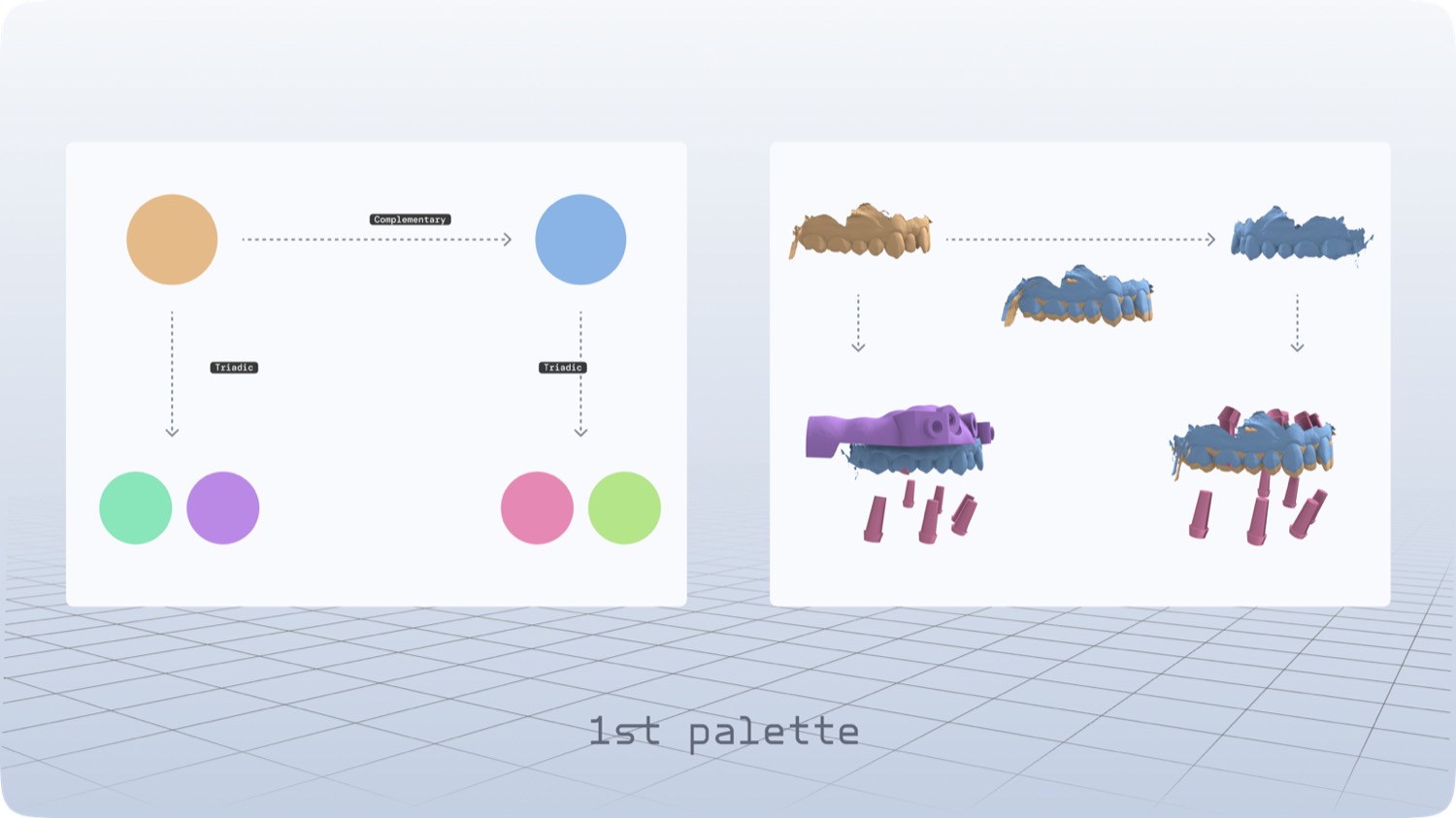
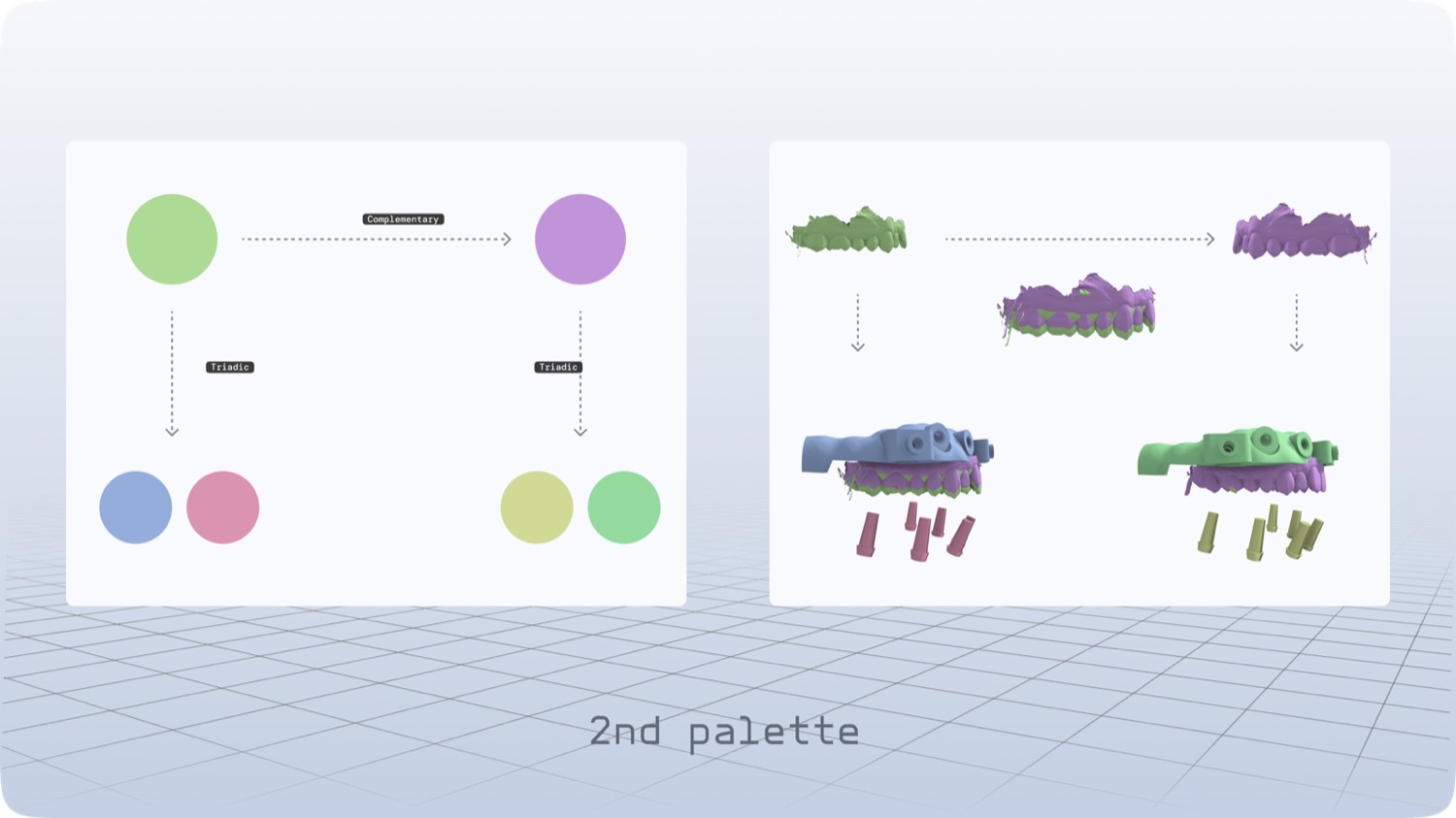
A concept for generating colour palettes that keep the many overlapping components of a complex 3D CAD file visually distinct, with enough contrast that adjacent parts never blur together.
The problem
Complex CAD files pack in dozens of overlapping and closely positioned components. Each one needs its own colour to read clearly, and adjacent or overlapping parts need real contrast between them. The palette has to guarantee that neighbouring components never share similar colours, and that the contrast holds no matter how complex the model gets.
The approach
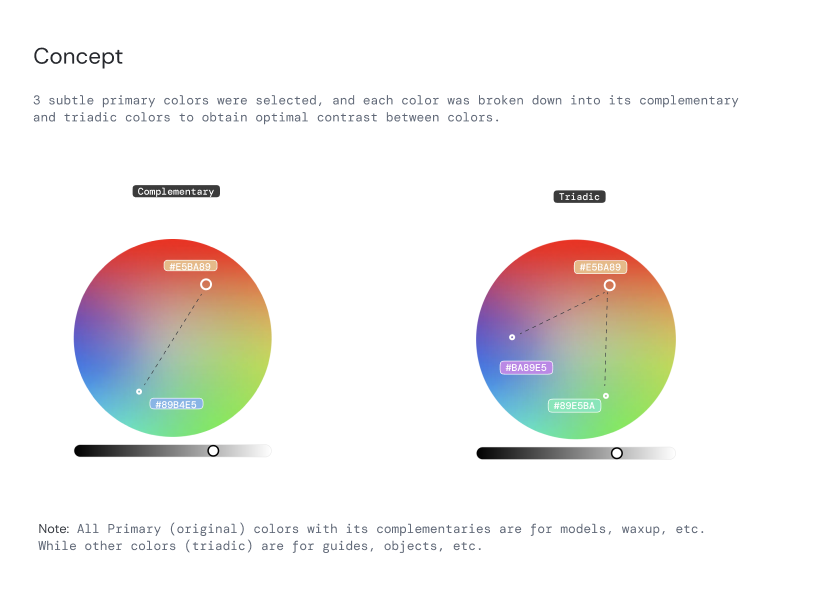
- Start from three subtle primary colours as the foundation
- For each primary, derive its complementary colour for maximum contrast and its triadic colours for subtle, distinct variations
- Generate tints and shades from the base and derived colours to add variety while keeping the palette in harmony
- Apply spatial logic: high contrast colours for adjacent or overlapping components, and closer tones for distant elements to keep the whole model coherent
The result
A flexible, scalable colour system that keeps every component visually distinct, even in the most complex CAD files. Primary colours carry the models, while the derived tones handle guides and objects.